Display & Exhibition
A modular kinetic exhibition framework — deployable, reconfigurable, and inspired by the curling spiral and phyllotaxis.
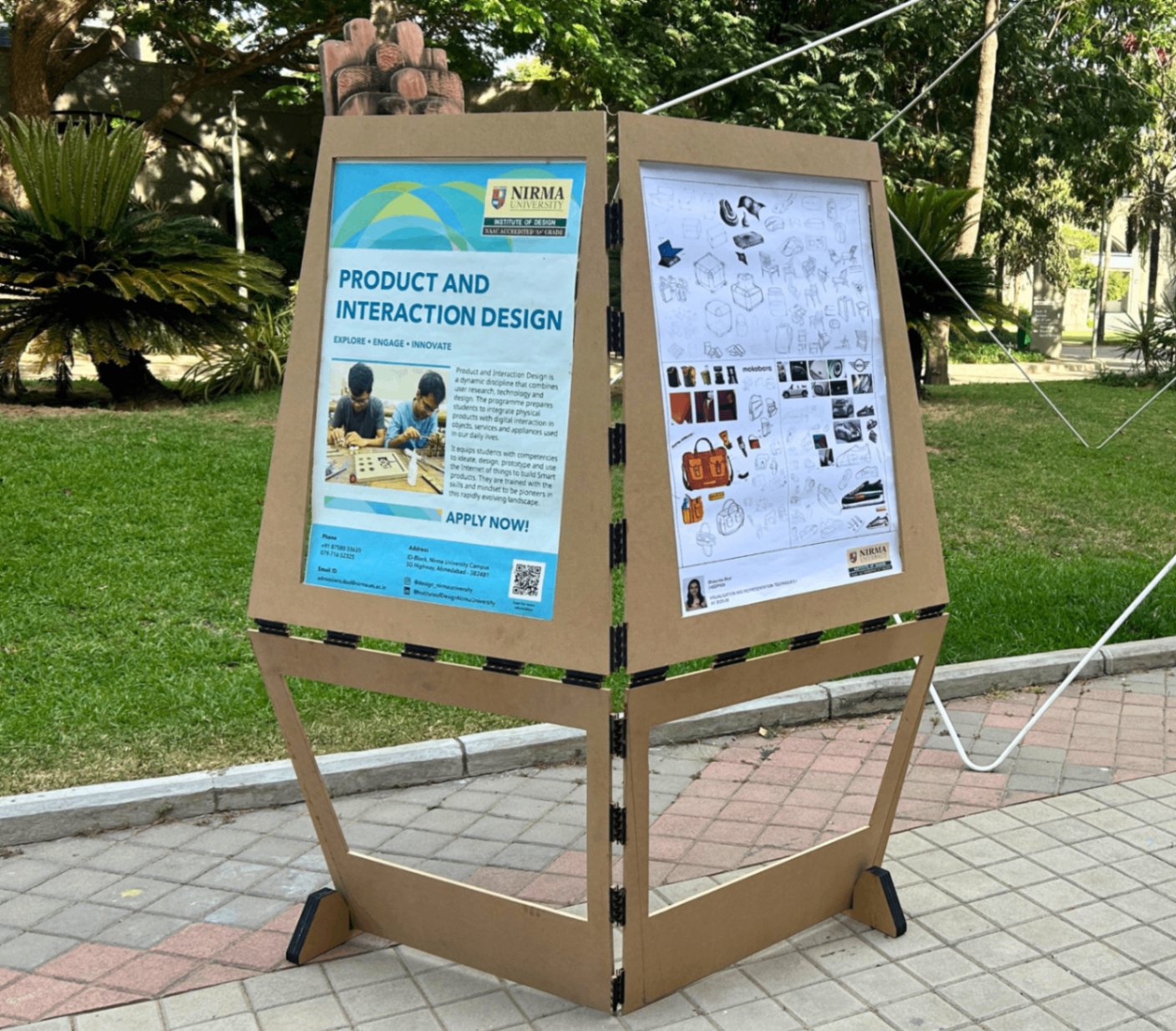
Design a temporary modular kinetic structure that transitions from a compact transportable state into a functional shelter, relief unit, or public pavilion through mechanical deployment.
The brief was adapted into a modular exhibition framework — integrating 2D and 3D display capabilities into a single deployable structure, supporting multiple configurations and a cohesive viewing journey where information and artifacts are seen together.
Problems in Existing Displays
Sustainability & Waste
Problem — Exhibition structures are often single-use, generating large amounts of material waste.
Opportunity — Reusable, modular, circular design using recyclable materials.
Portability & Assembly
Problem — Heavy structures requiring tools, setup time, and skilled labor.
Opportunity — Flat-pack, lightweight, tool-free deployment.
Interaction / Kinetic Hook
Problem — Static displays are less engaging.
Opportunity — Introduce movement and deployable interactive elements.
Flexibility
Problem — One fixed layout cannot fit different exhibition spaces.
Opportunity — Reconfigurable modular system.
Case Study
Curling Spiral Kinetic Sculpture
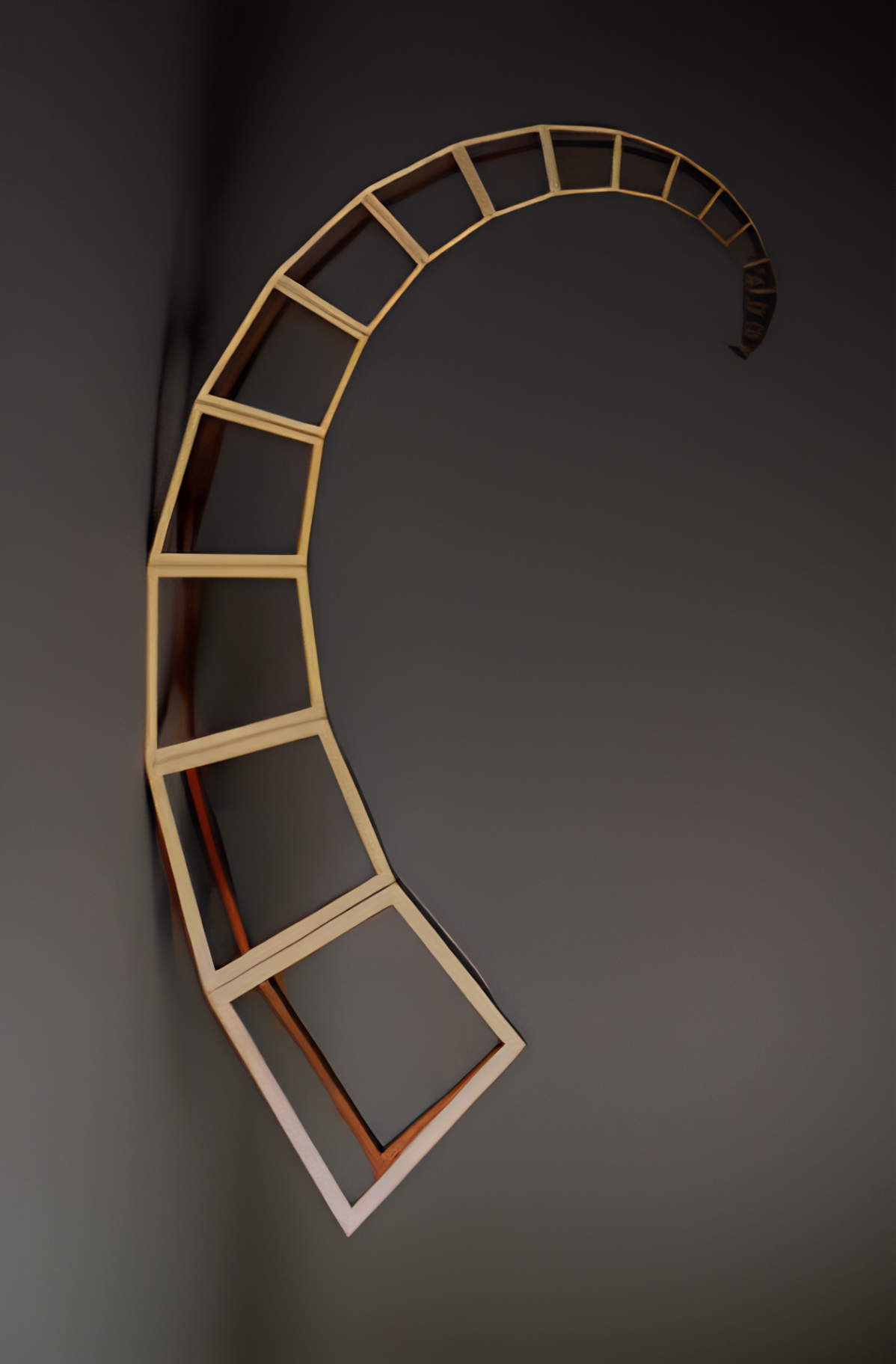
Inspired by John Edmark's Blooms and the principle of phyllotaxis — the same mathematical logic seen in sunflowers and pinecones. Each shape is slightly larger than the previous, approximating the Golden Ratio (1.618), enabling smaller units to nest inside larger ones for compact storage and space-efficient deployment.
Prototyping
01
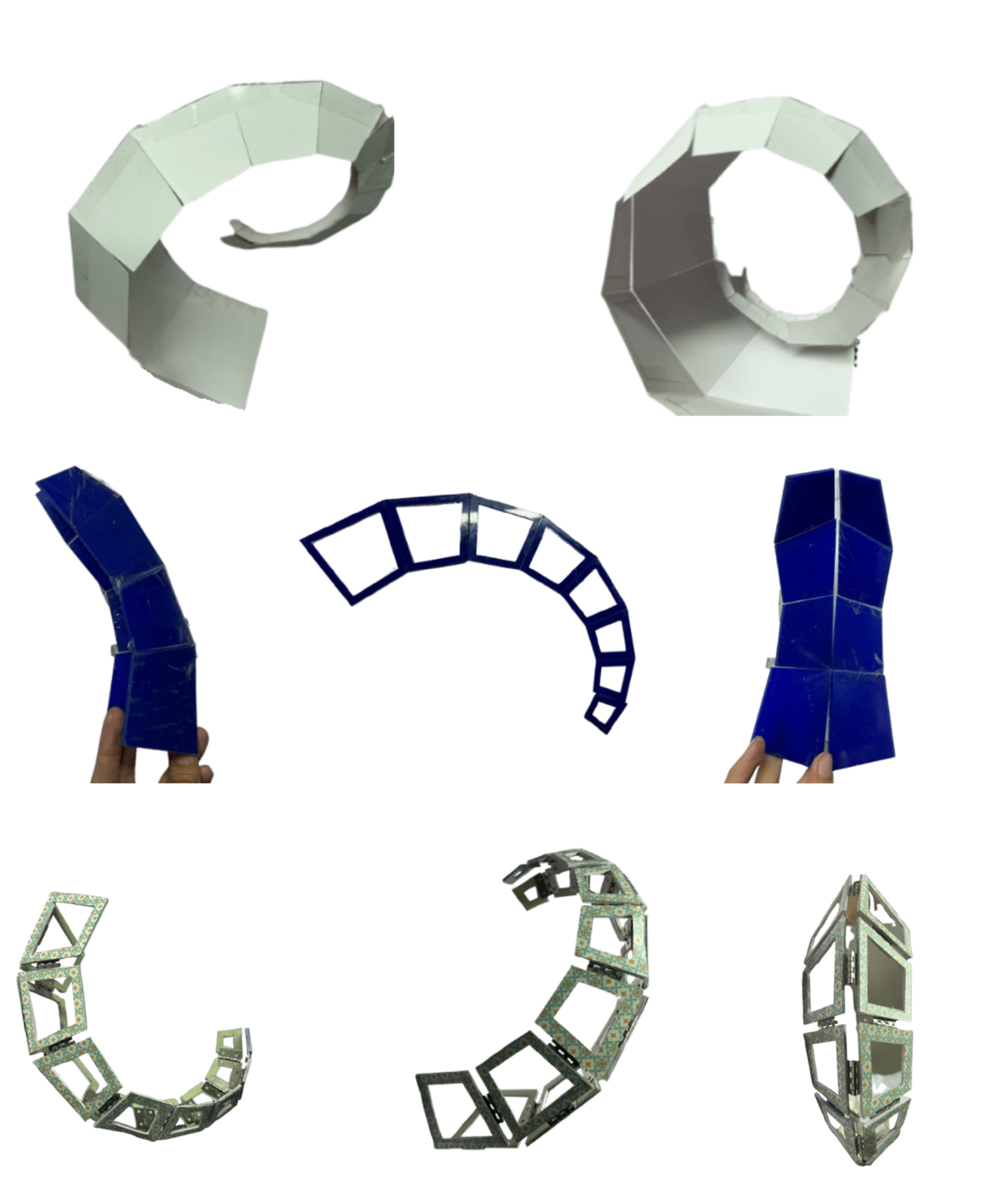
180 GSM Paper
Rapid iteration with masking tape. Verified the mathematical curve and served as proof-of-concept.
02
3 mm Acrylic
Required a 3 mm offset at each joint to prevent rigid-edge collision during curling. Too heavy; adhesive joints insufficient — needed a stronger pivot.
03
3 mm Sunboard
Sufficient rigidity, lighter than acrylic, maintained the spiral geometry. Enabled a fluid ‘crawl’ motion — chosen as the most practical material for large-scale deployment.
Form Iteration
Tests confirmed the curling behaviour does not depend on the original spiral form. Constant taper angle and tension path are what matter — external shape can change freely. Uniform wedge-shaped modules, all the same size, force a consistent arc when tension is applied.
High-Fidelity MDF Prototype
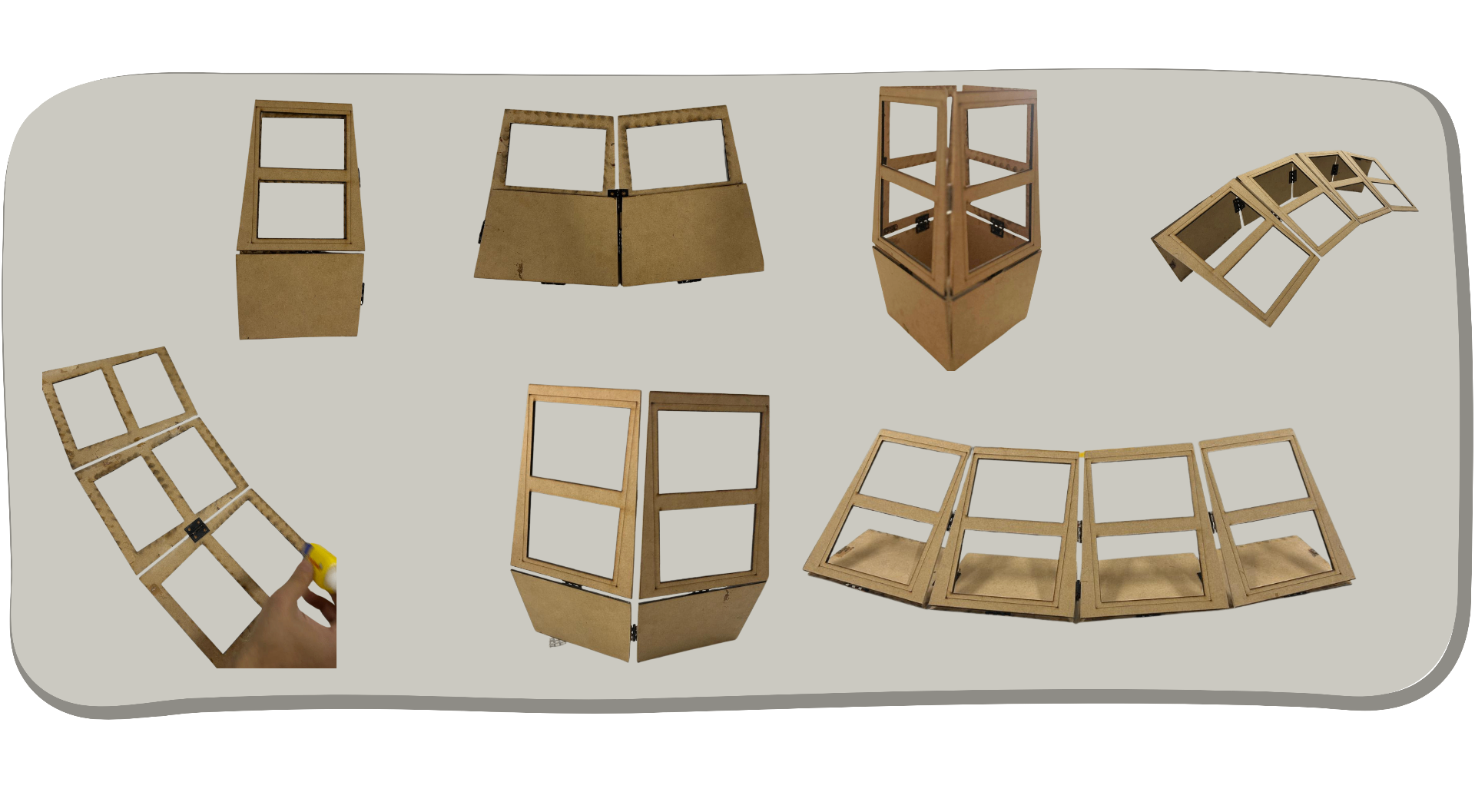
- Structural IntegrityTension cable moves and locks heavier rigid materials; joints remain functional under load.
- Edge PerformanceLaser-cut edges reduced friction and improved sliding and locking action.
- Clearance Validation3 mm clearance remains sufficient for thicker, denser materials.
Fabrication Process
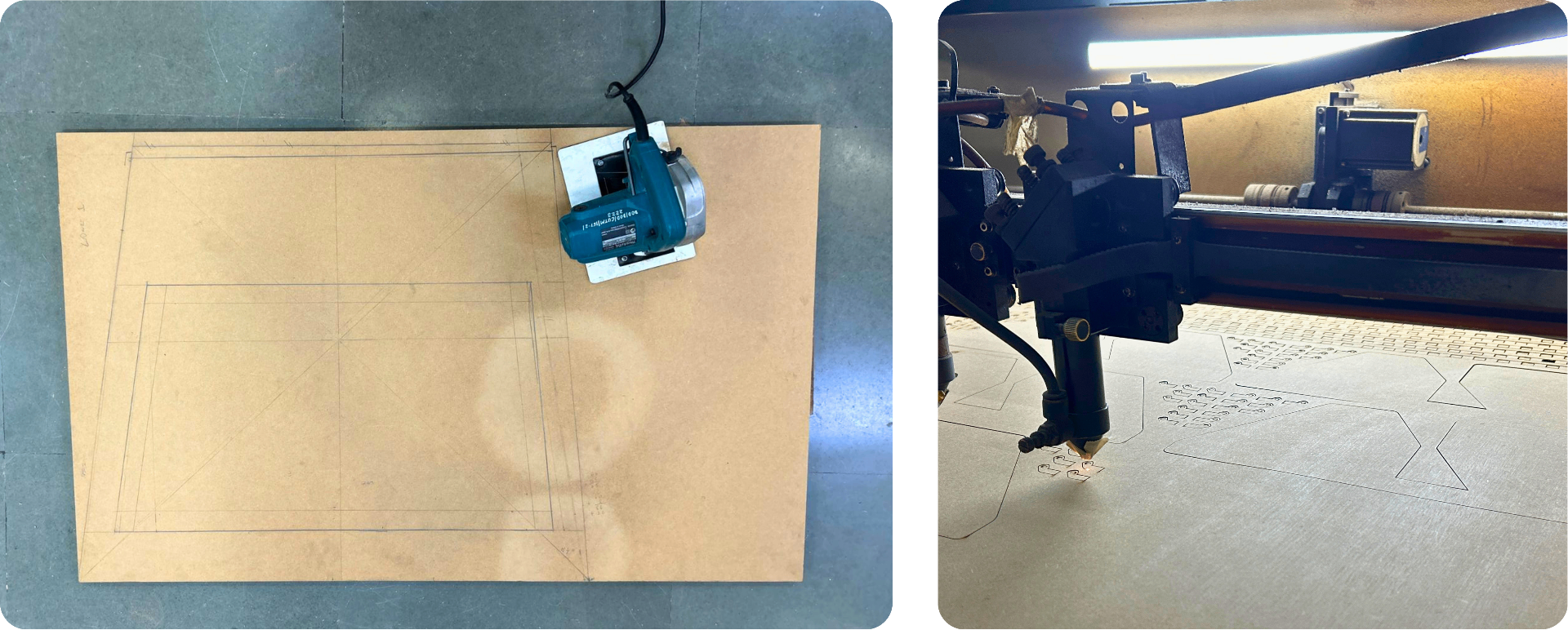
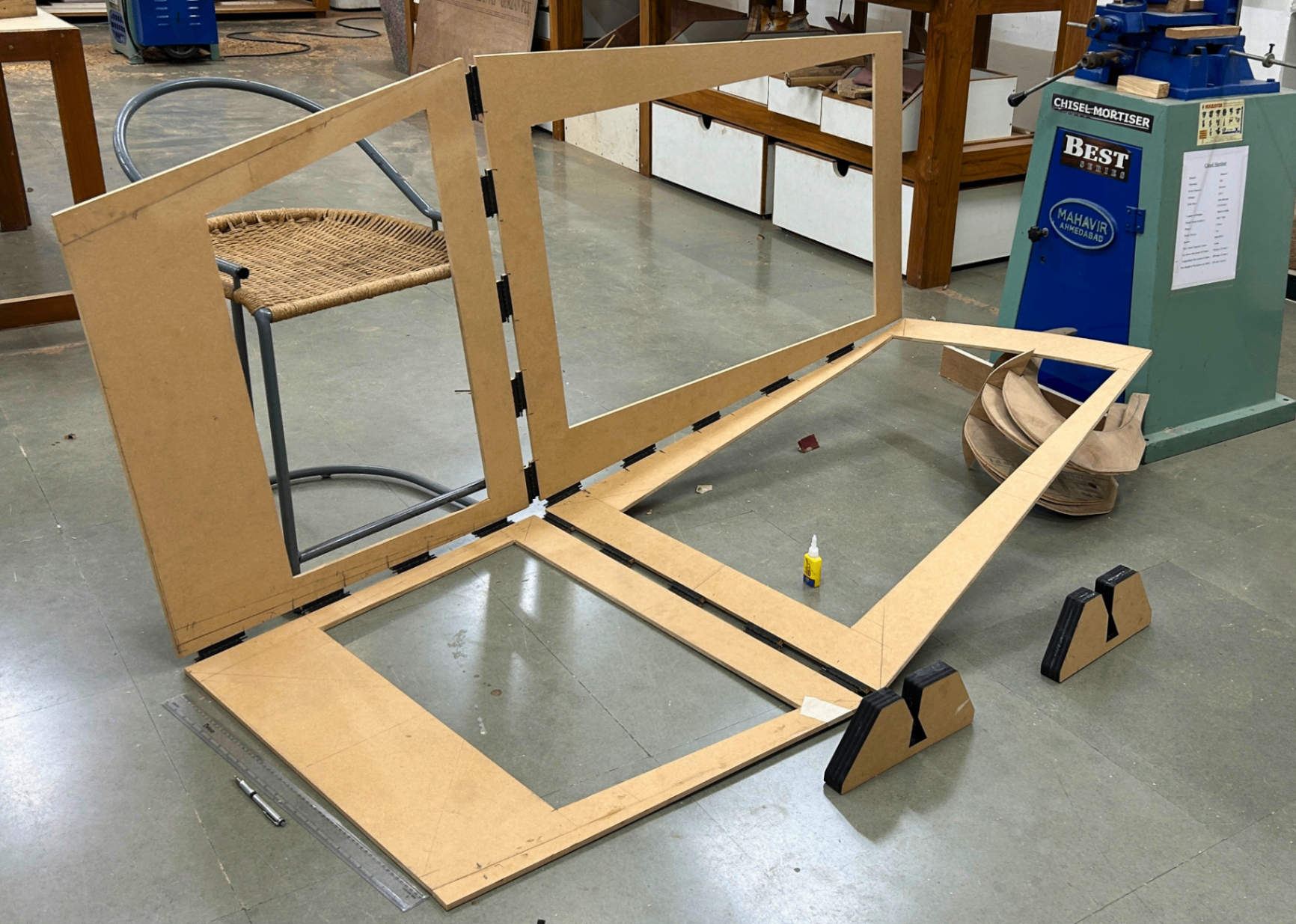
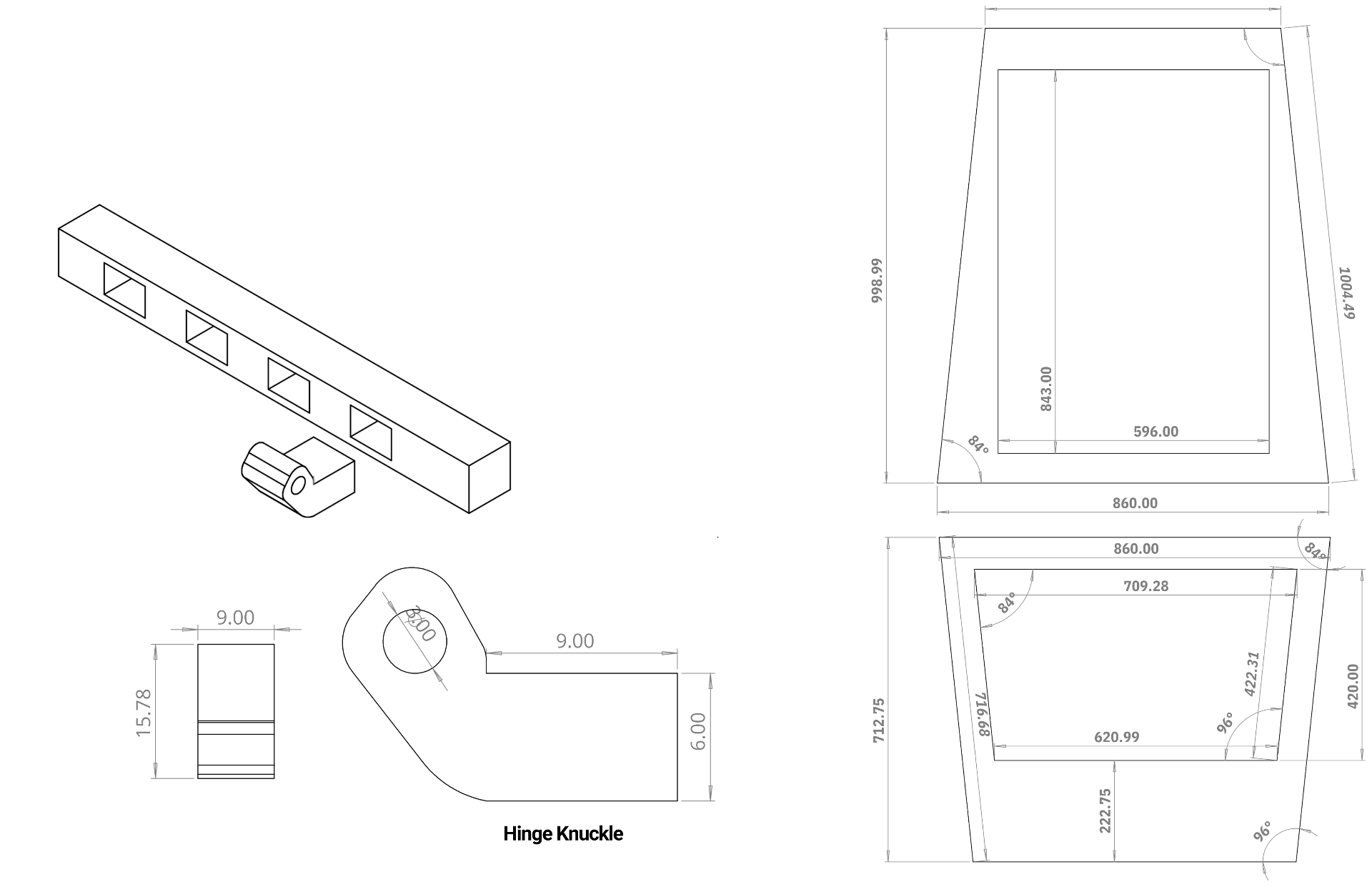
Panels were marked and routed from 9 mm MDF; interlocking hinge knuckles and grooves were laser-cut and integrated directly into the panel edges before workshop assembly.
Layout Configurations
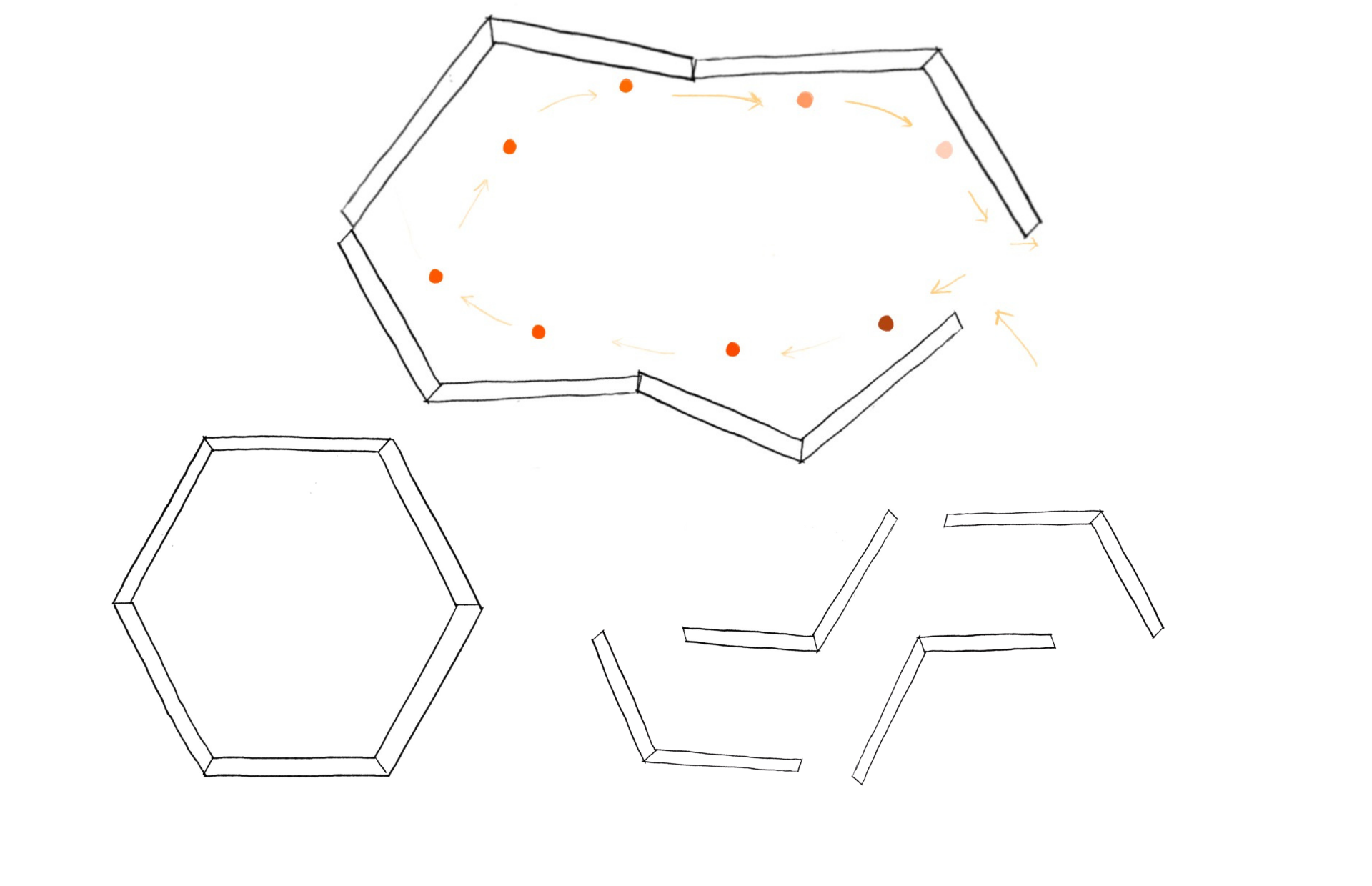
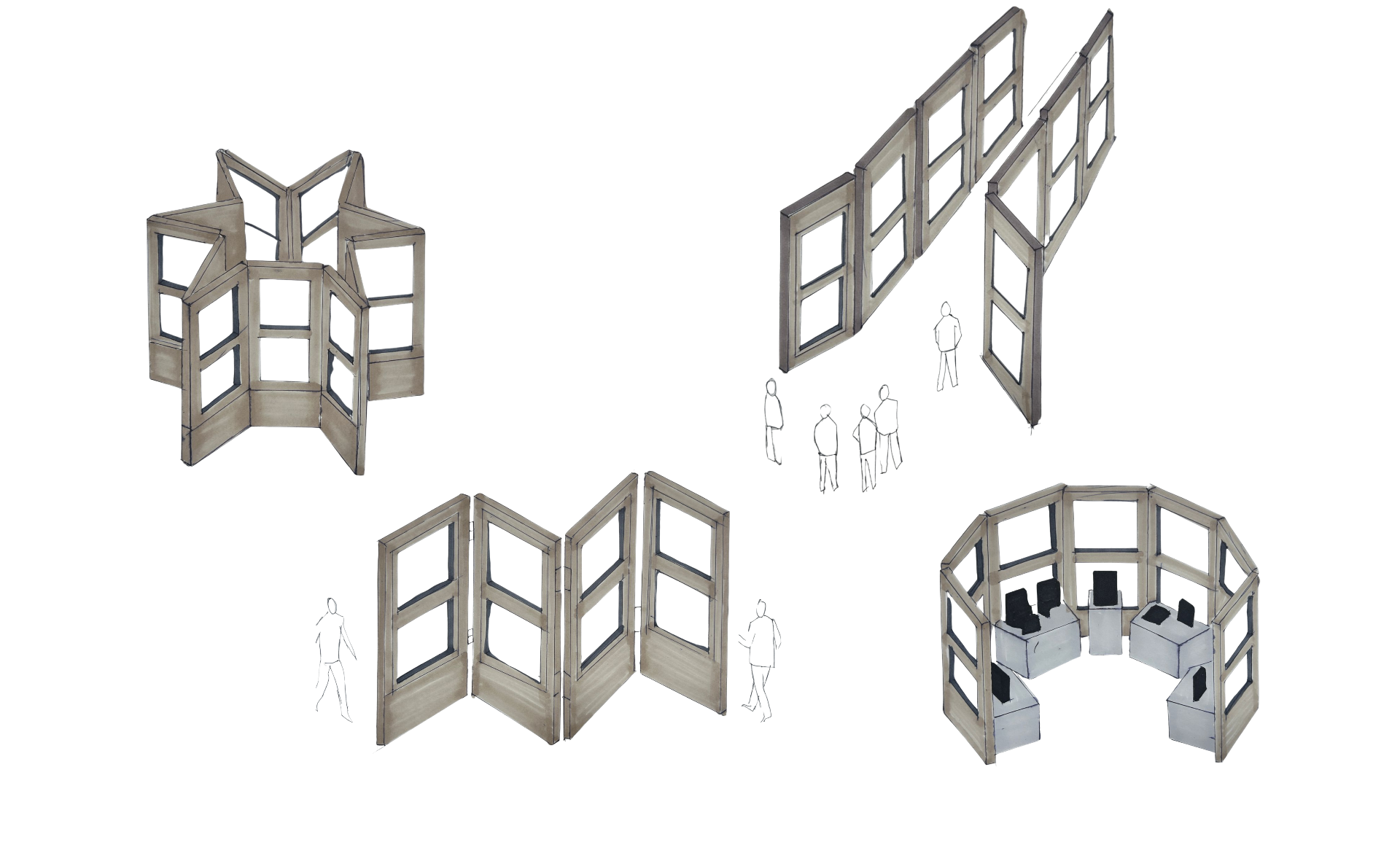
01
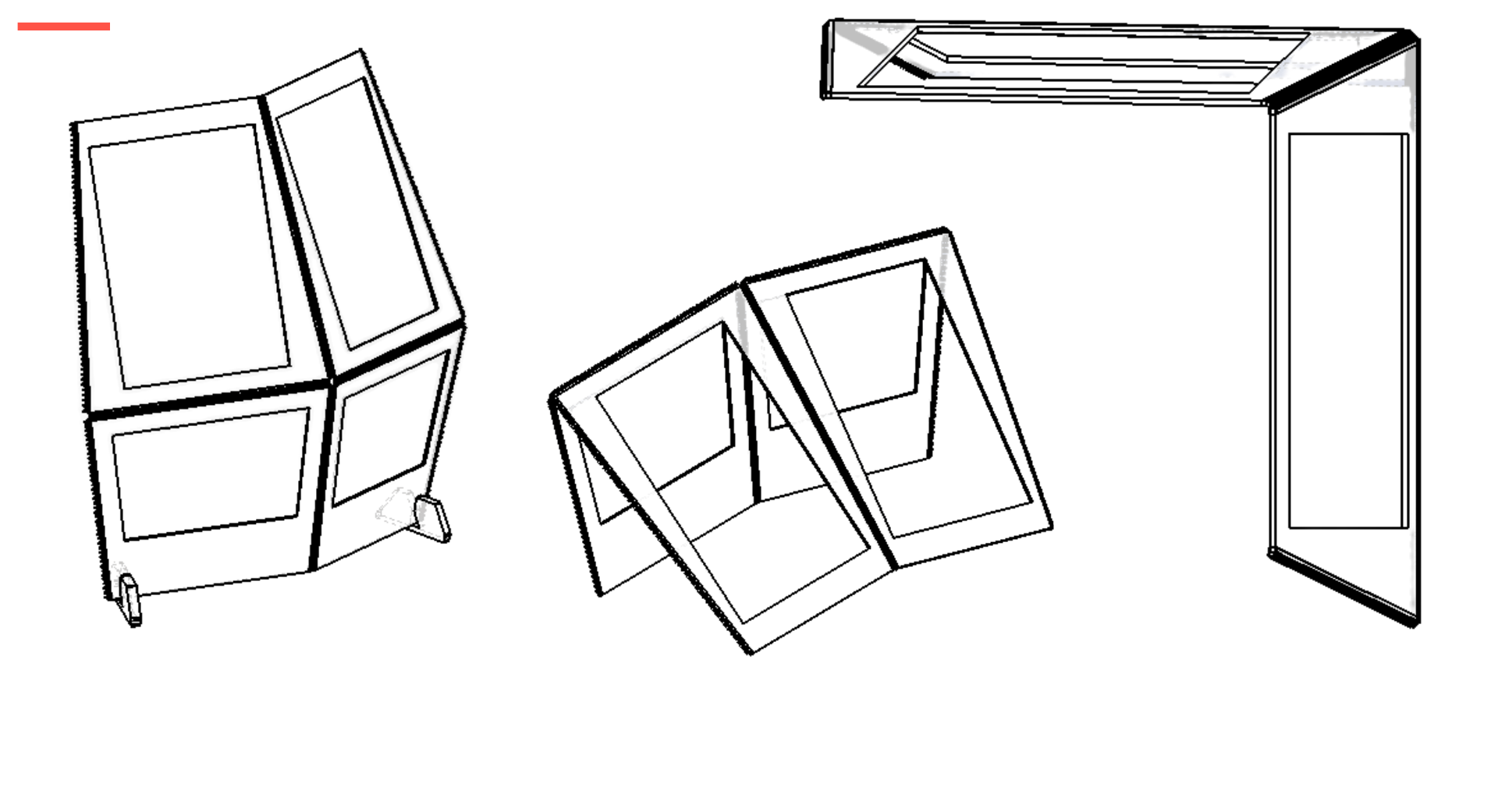
Compact triangular tower arrangement
02
Linear wall arrangement
03
Zig-zag exhibition path
04
Semi-circular enclosure
05
Hexagonal arrangement
06
Multi-segment spatial configuration
Structural Analysis
- Structural Integrity — Existing hinges work on 3 mm MDF but not on the 9 mm industrial panels needed for the final structure.
- Aesthetic Disruption — External hinges interrupt the clean visual language and distract from the spiral geometry.
- Unintended Kineticism — Prototype lacked a state-lock and could shift when touched — a safety concern at scale.
- Rejected: Kerf Cutting — 9 mm MDF becomes brittle, cannot support a 5.7 ft structure, and offers no state-lock.
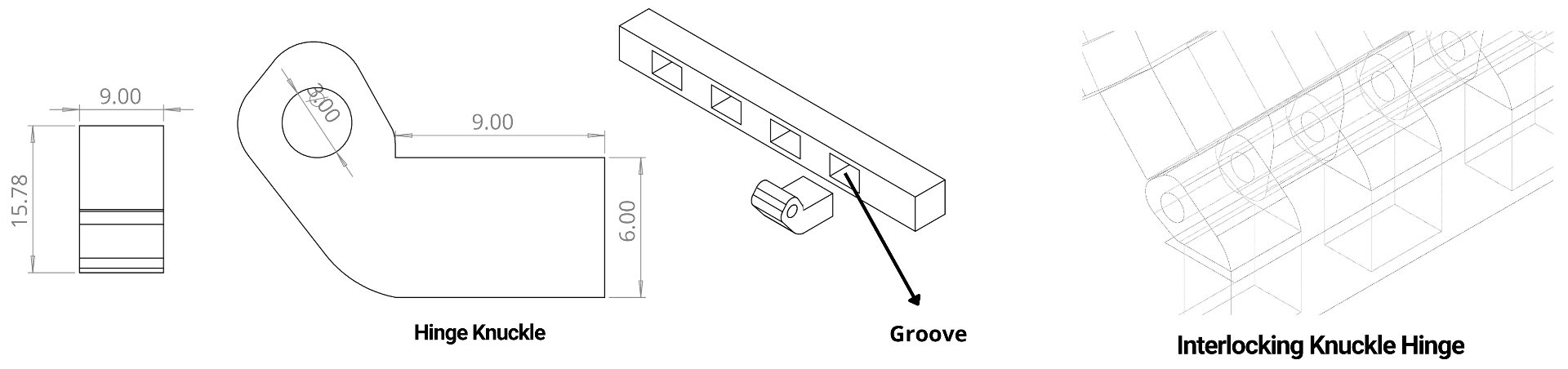
Custom Interlocking Hinge
Modular interlocking knuckle and leaf, integrated directly into the panels.
- Width
- 9.00 mm
- Bore Diameter
- 3.00 mm
- Height
- 15.78 mm
- Step Length
- 6.00 mm
CAD Development
Ergonomics
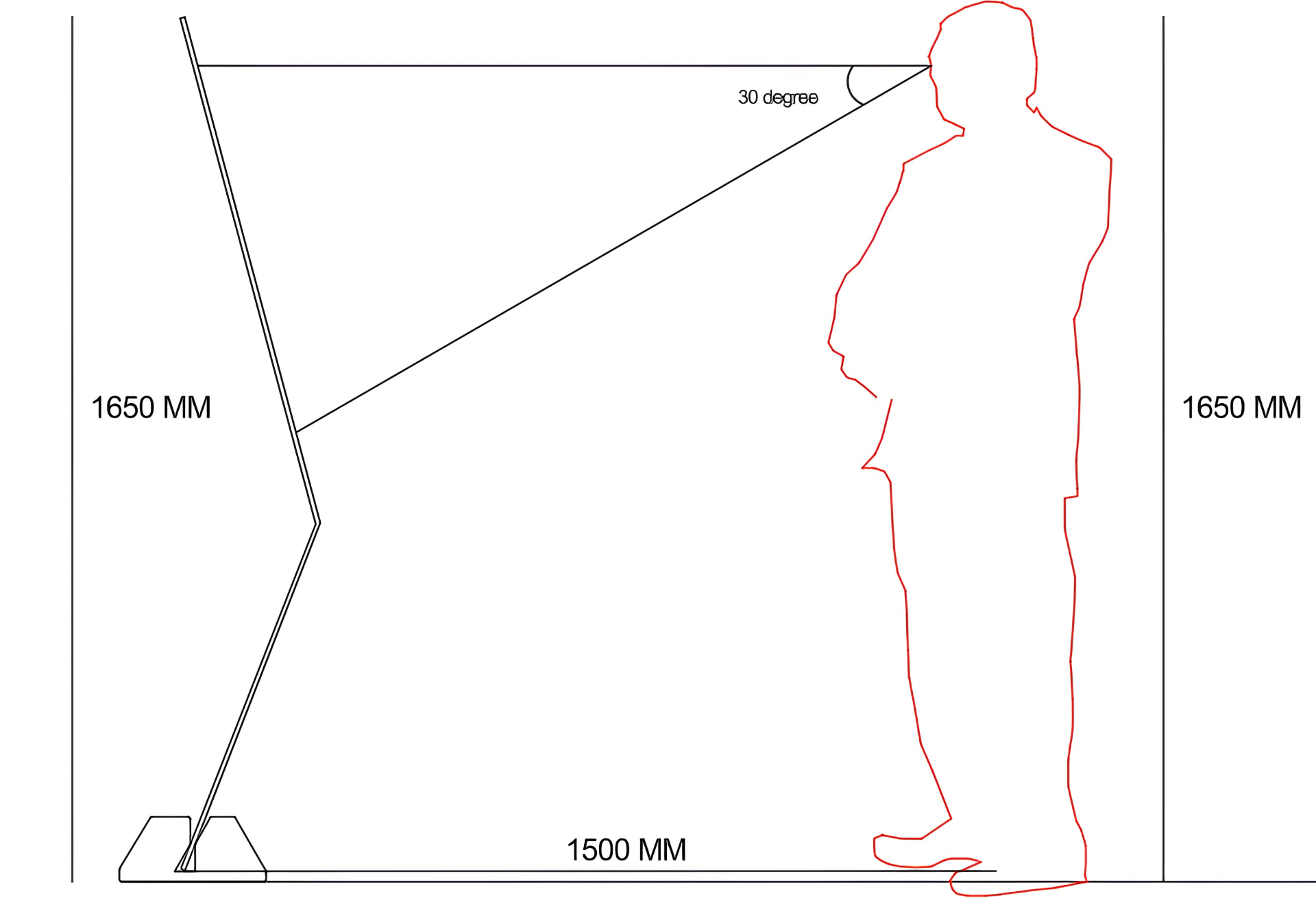
Viewing comfort was evaluated for an upright user reading a vertical display.
- Display Height
- 1650 mm
- User Distance
- 1500 mm
- Viewing Angle
- 30°
Fabrication & Final Deployment
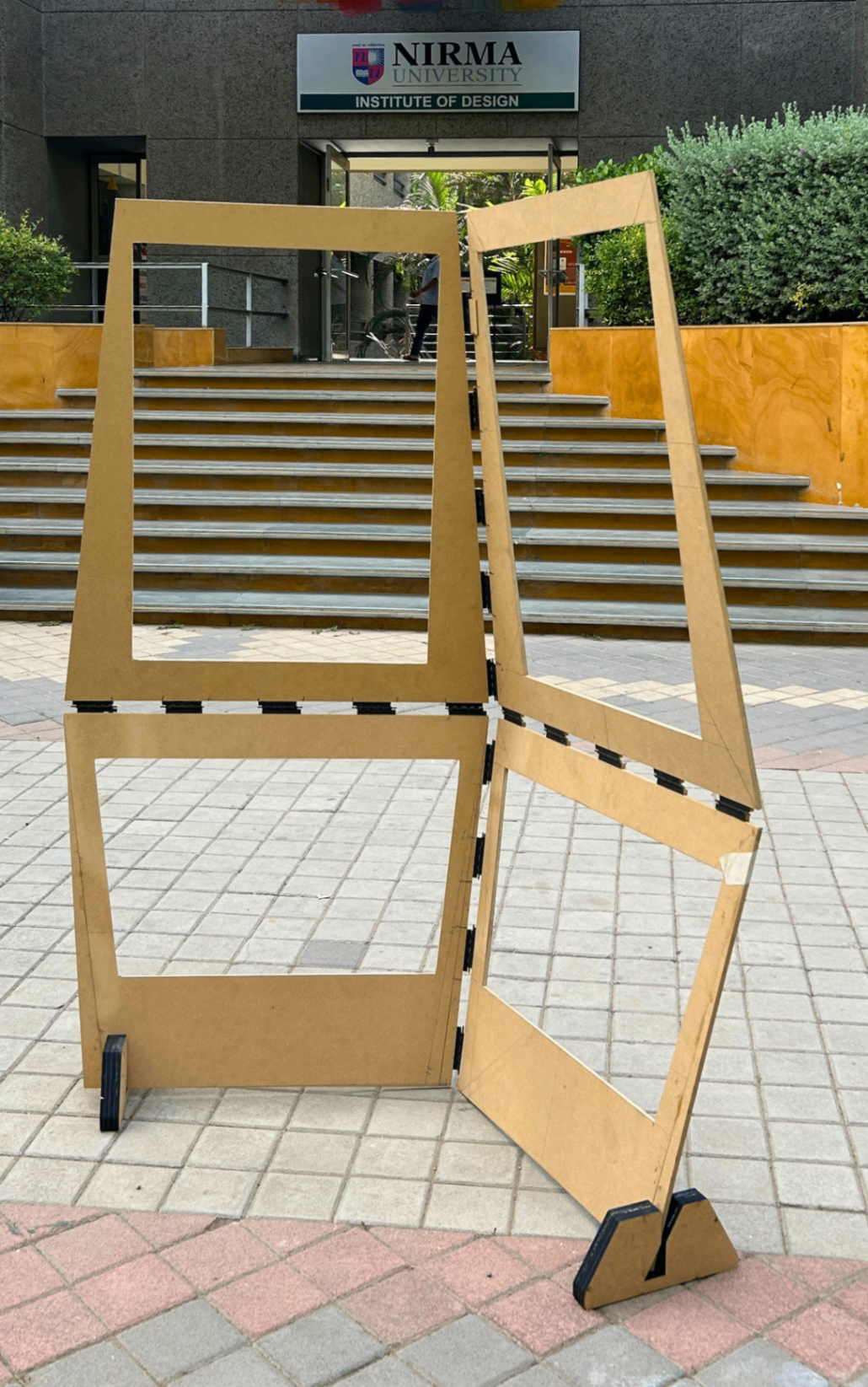
The final outcome is a modular, collapsible, deployable exhibition system — capable of displaying 2D exhibition graphics and reconfigurable into multiple spatial layouts, developed through paper, acrylic, sunboard, MDF, CAD, technical drawing, ergonomic study, and full-scale fabrication.