WINGO
An IoT-based bird deterrent device — humane, intelligent and scalable, designed for urban Indian environments and supported by a companion mobile app.
Mission
To design and build a humane, intelligent, and scalable IoT system that automatically detects and deters specific nuisance birds in real time — without causing harm.
The Problem
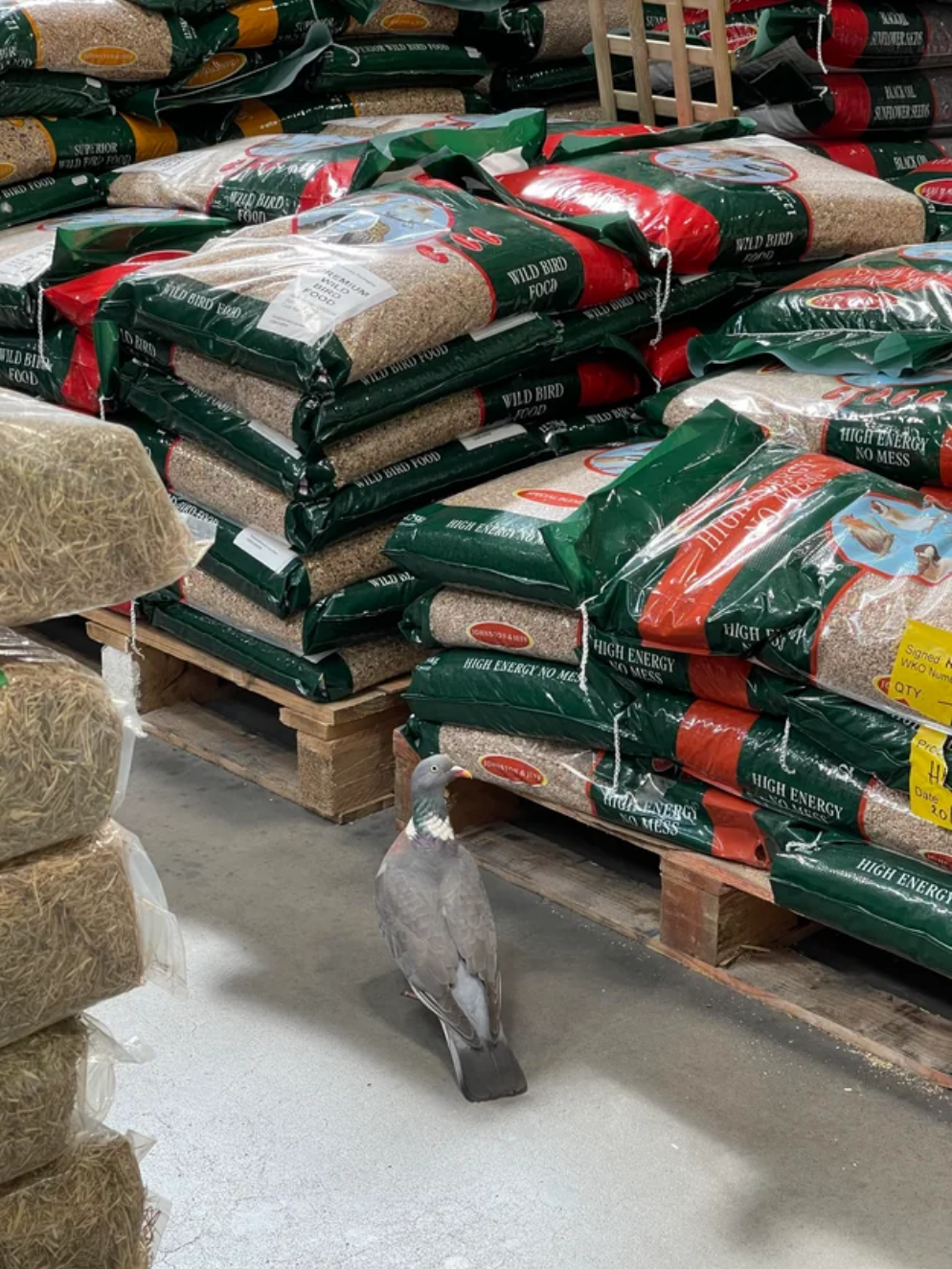
Overpopulation of pest birds — especially pigeons — is a growing challenge in urban India. Three major concerns drive the project:
Concern
Public Health Risk
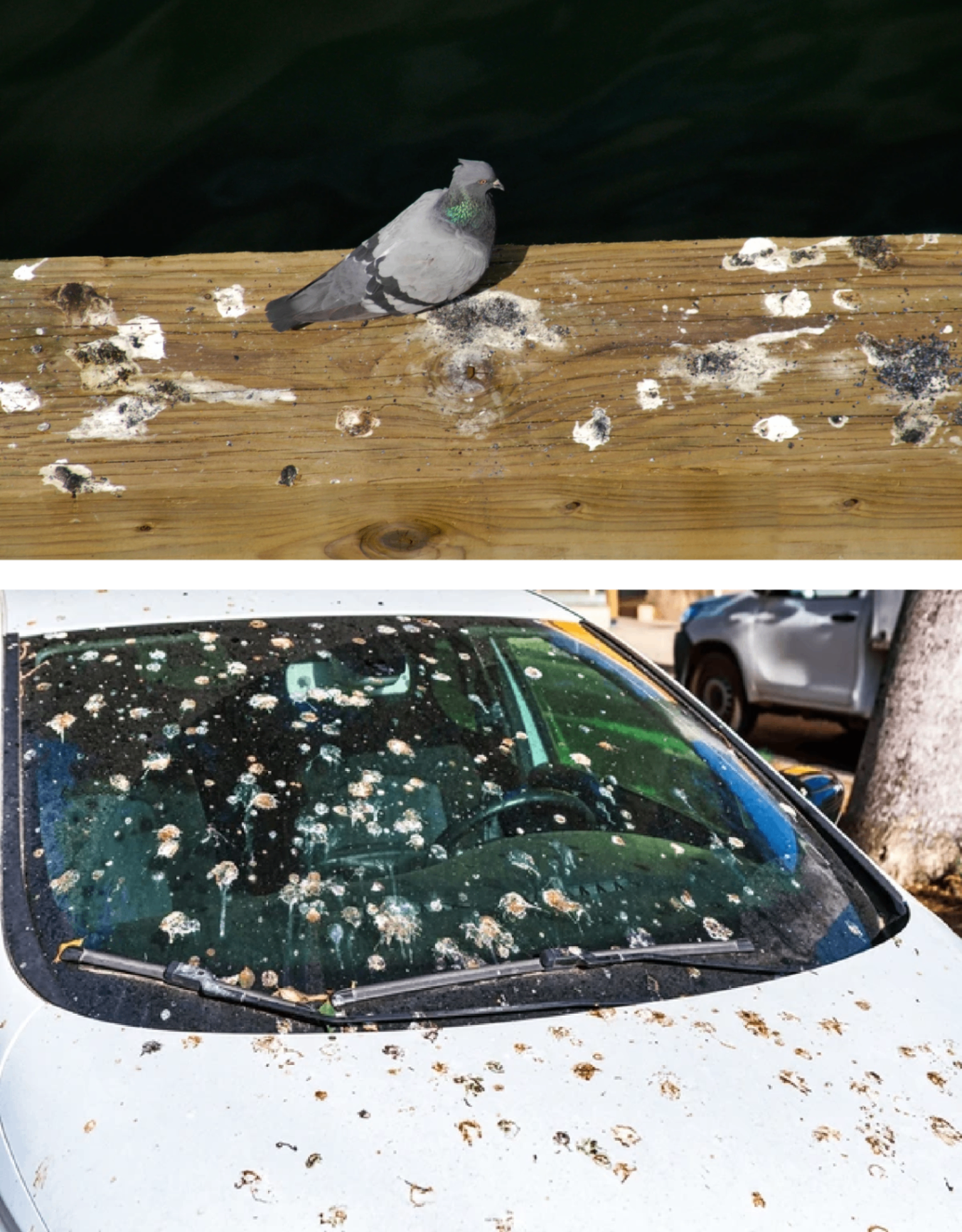
Bird droppings are linked to respiratory diseases such as Histoplasmosis and Cryptococcosis.
Concern
Property Damage
Acidic droppings corrode building materials, stain facades and damage infrastructure.
Concern
Ineffective Existing Solutions
Netting, spikes and chemical repellents are costly, inhumane and ineffective over the long term.
Design Brief
Problem Mapping
Severity
Severe
- — Noise
- — Droppings
- — Aggressive behavior
Severity
Considerable
- — Overpopulation of certain species
- — Mess with food and plants
Severity
Moderate
- — Damage to property
- — Health concerns
- — Odor
- — Blocked spaces
- — Cultural / personal preference issues
Areas Affected
Transport & Parking
- — Car parks
- — Garages
- — Bridges
- — Flyovers
Food-Related Spaces
- — Restaurants with outdoor seating
- — Cafés
- — Markets
- — Street food stalls
Public & Open Spaces
- — Parks
- — Gardens
- — Monuments
- — Heritage buildings
- — Schools
- — Colleges
Commercial & Public Buildings
- — Office complexes
- — Malls
- — Hospitals
- — Railway stations
- — Bus stations
- — Airports
Residential Areas
- — Balconies
- — Terraces
- — Window ledges
- — AC units
- — Rooftops
- — Water tanks
Industrial & Utility
- — Factories
- — Warehouses
- — Solar panel installations
- — Power stations
- — Telephone towers
Market Research
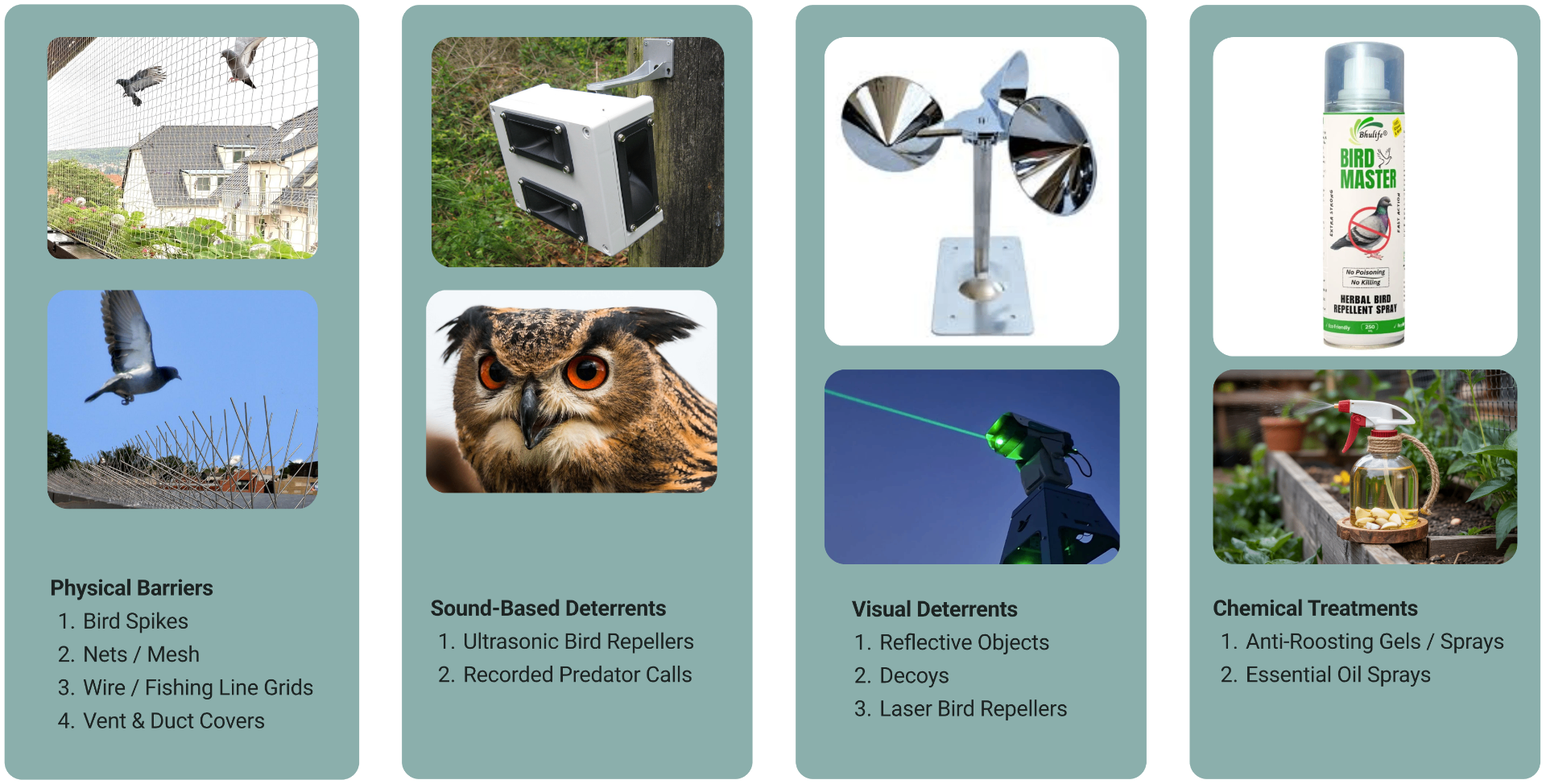
Surveyed existing bird deterrents — physical barriers, sound-based, visual, and chemical treatments — to identify gaps and opportunities for an IoT-driven approach.
Competitor Analysis
Rentokil PCI
Technology
Bioacoustic systems, Electric tracks
Features
Pre-recorded distress calls, Predator calls, Bird Track electric strip
Target Audience
Commercial, Industrial, Airports
Bird-X
Technology
Sonic / Ultrasonic devices
Features
BirdXPeller Pro, Audible distress calls, Ultrasonic units
Target Audience
Industrial, Commercial, DIY users
Shyam Innovations
Technology
Ultrasonic devices
Features
Solar-powered & electric repellents
Target Audience
Residential, Small commercial, Agricultural
Bird Control Group (NL)
Technology
Automated laser systems
Features
AVIX Autonomic moving laser beams
Target Audience
Airports, High-value agriculture, Industrial
Indirect competitors include traditional service providers (HiCare, local netting installers, Pigeon Control India, general pest control). Low-cost DIY alternatives include reflective tapes, scare-eye balloons, repellent gels, and plastic owl decoys.
User Research
Anjali Mehta
42 · Mumbai, India · Homemaker — apartment with balcony
Pain Points
- — Balcony dirty from droppings & feathers
- — Daily cleaning headache
- — Nets block airflow and darken the balcony
Preferences
- — Silent / subtle deterrent
- — Non-disturbing to neighbours
- — Budget ₹2,000–₹3,000
- — Removable — may shift houses
Rajiv Shah
29 · Ahmedabad, India · IT Professional — works from home
Pain Points
- — Pigeons on window sills
- — Cooing disturbs work calls
- — Droppings prevent opening windows
Preferences
- — Mobile app control
- — Phone integration
- — Light deterrents acceptable if not too bright
- — Compact, easy window install
Damage & Risk Analysis
Health Risks
Airborne pathogens from dried droppings.
- — Cryptococcosis
- — Histoplasmosis
- — Psittacosis
- — Salmonellosis
- — E. coli related illness
Infrastructure Damage
- — Corrodes metal
- — Corrodes stone
- — Damages paint
- — Accelerates wear of buildings & heritage structures
Nuisance Effects
- — Dirty sidewalks, cars, buildings
- — Clogged drains and vents
- — Structural problems
- — Ticks, mites, home infestations
Form Development
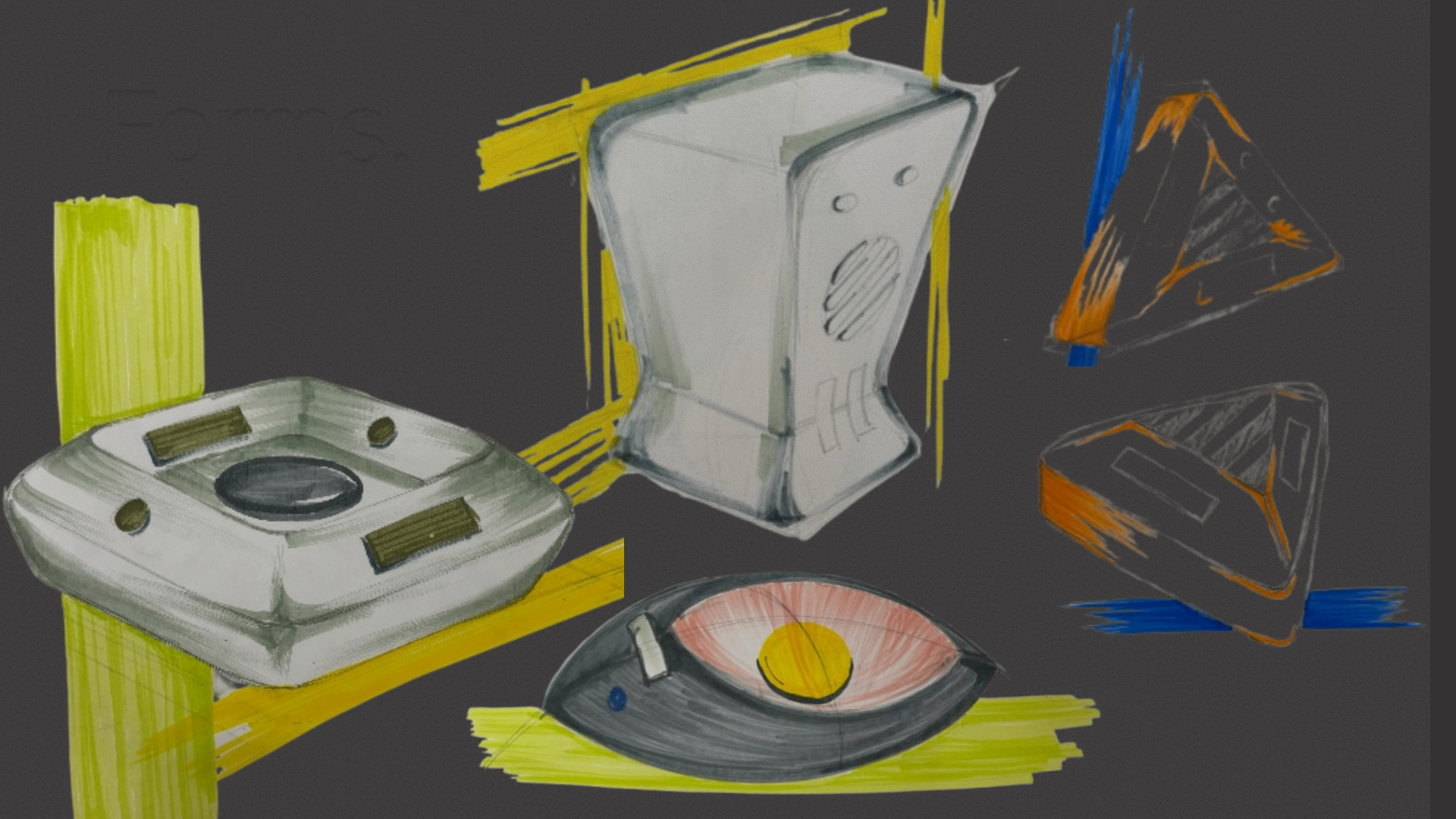
Hand-sketched concepts explored compact electronic forms — angular, geometric bodies with multiple mounting possibilities and integrated sensing/deterrent areas.
Digital Exploration & Evaluation
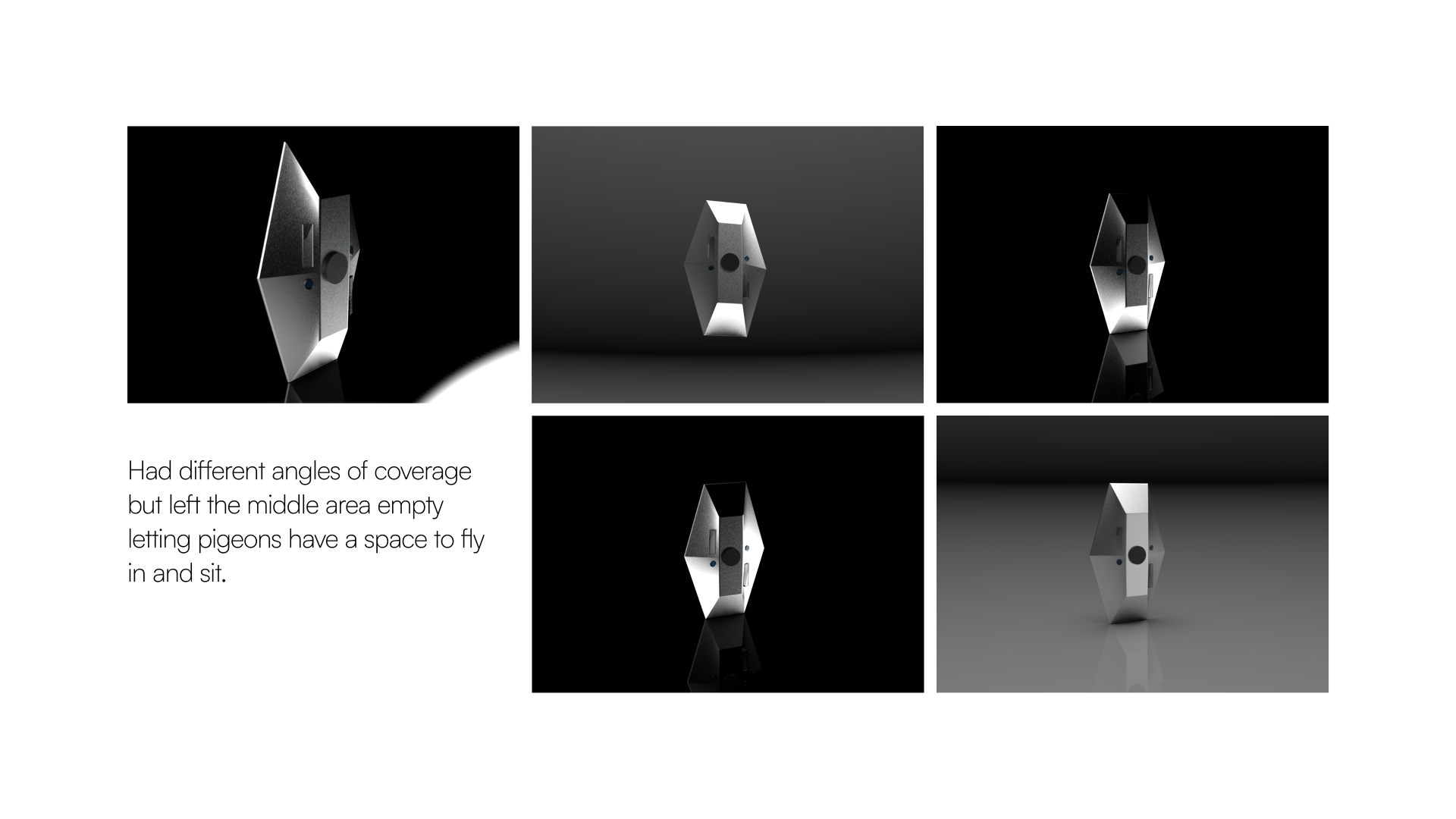
Concept 1
Advantages
Covered all motion sensor angles. Allowed multiple hanging sides.
Issue
Pigeons could still sit on the product unnoticed.
Concept 2
Advantages
Different angles of coverage.
Issue
Empty central area allowed pigeons to fly through and sit.
Final Product
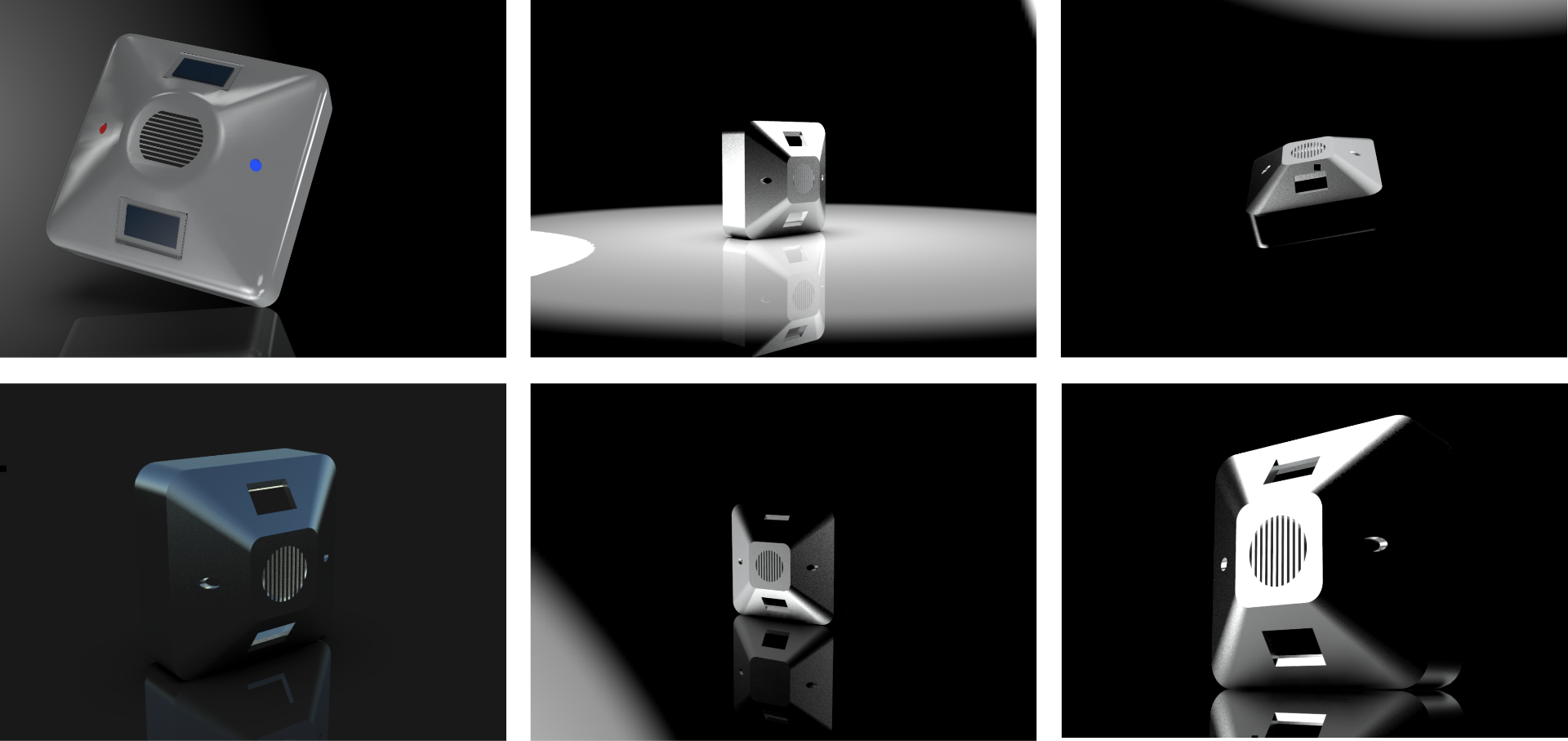
A geometric, diamond-profile body with angled symmetrical surfaces, a central circular grille, rectangular sensor windows, indicator lights and mounting-oriented geometry.
Technical Drawing
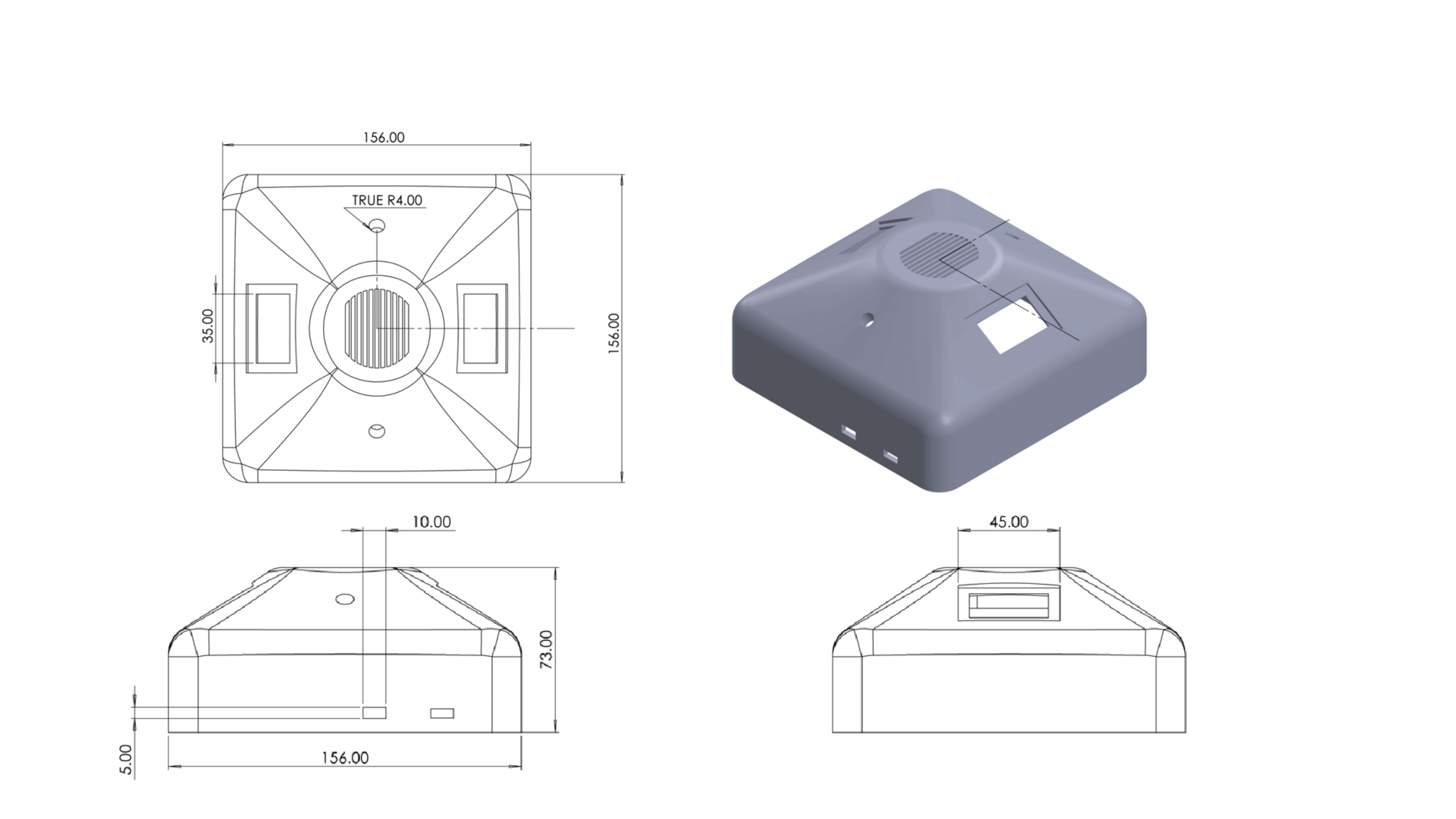
Symmetrical pyramidal body with a 156 × 156 mm footprint and 73 mm height — rounded edges, tapered top, central grille and side openings for sensors.
Electronics & Circuit
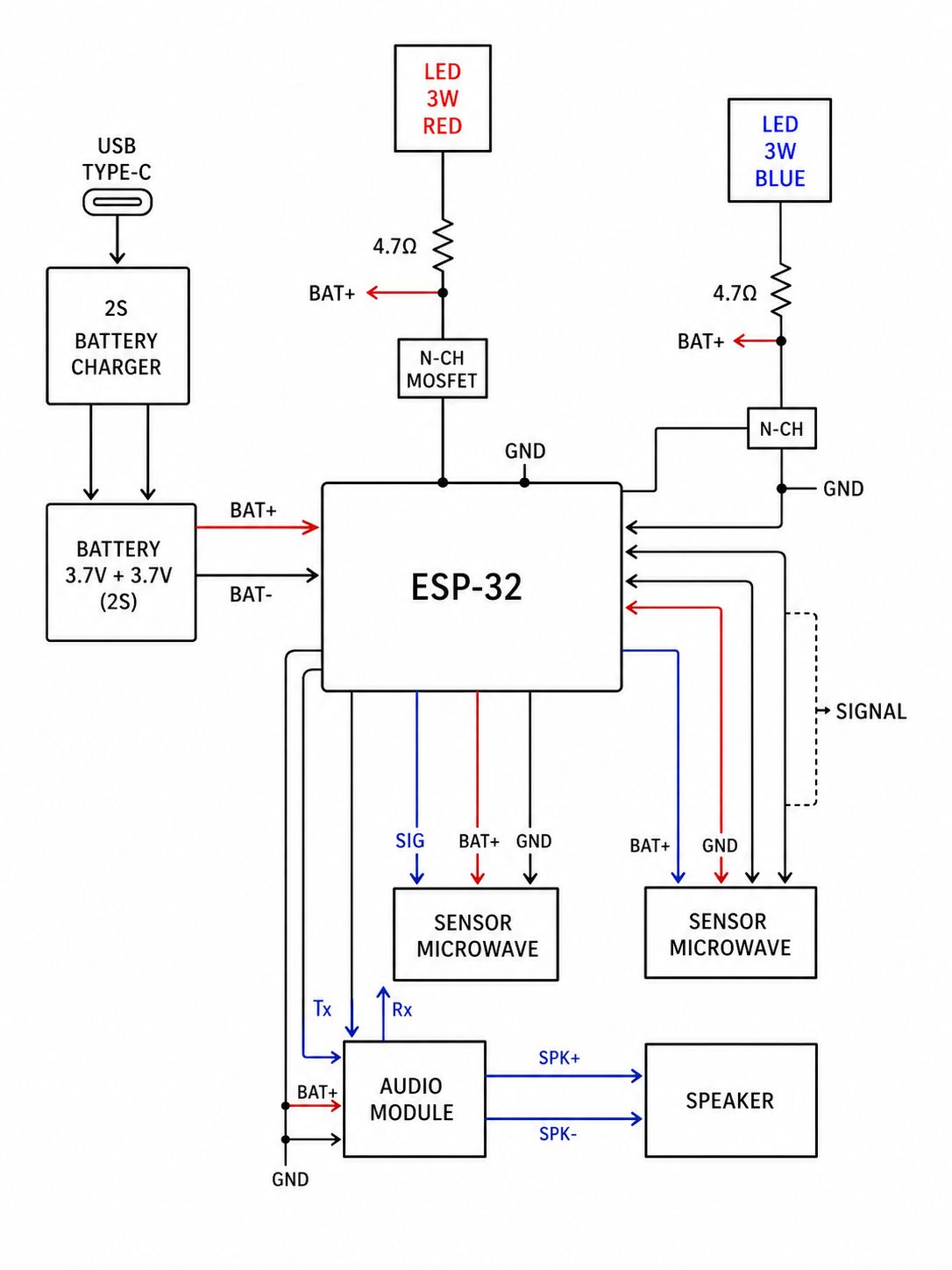
ESP-32 driven system with USB-C charging, 2S Li-ion pack, dual microwave sensors, audio module with speaker, and high-power 3 W red/blue LEDs gated through N-channel MOSFETs.
Companion Mobile App
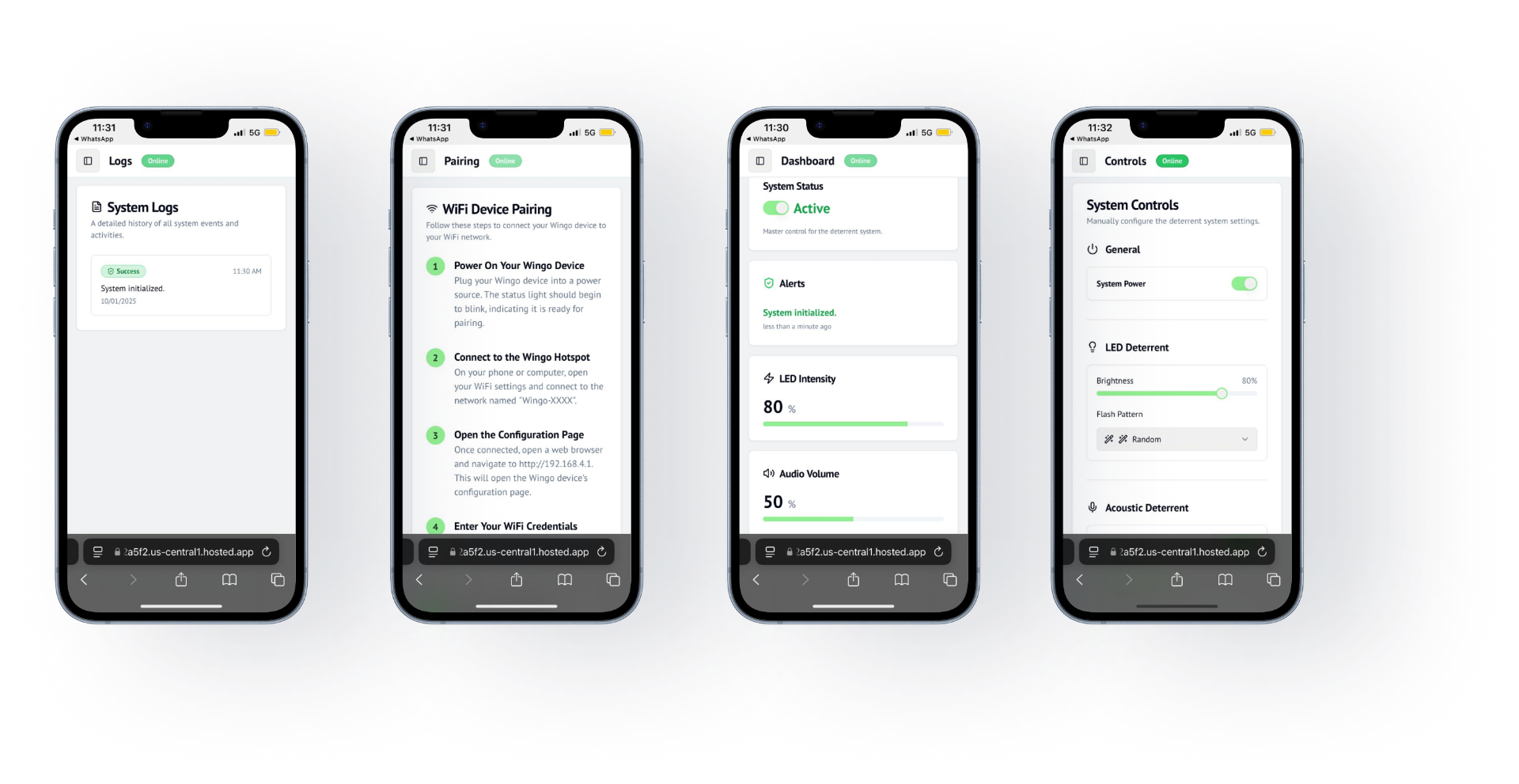
Pairing, dashboard, alerts, system controls — LED brightness & flash pattern, audio volume, sensitivity, and account settings — all from the phone.
Project Preview
How WINGO Works
A short walkthrough of the WINGO device in action — detection, deterrent response and app interaction.
Final Project Summary
- — An IoT-based bird deterrent device.
- — Focused primarily on nuisance birds such as pigeons.
- — Designed for urban Indian environments.
- — Humane and non-harmful approach.
- — Supported by a smartphone application.
- — Built after studying physical, electronic and DIY bird-control methods.
- — Developed through sketches, digital form evaluation, technical detailing and UI design.
- — Targeted at residential, commercial, public, industrial and infrastructure environments.